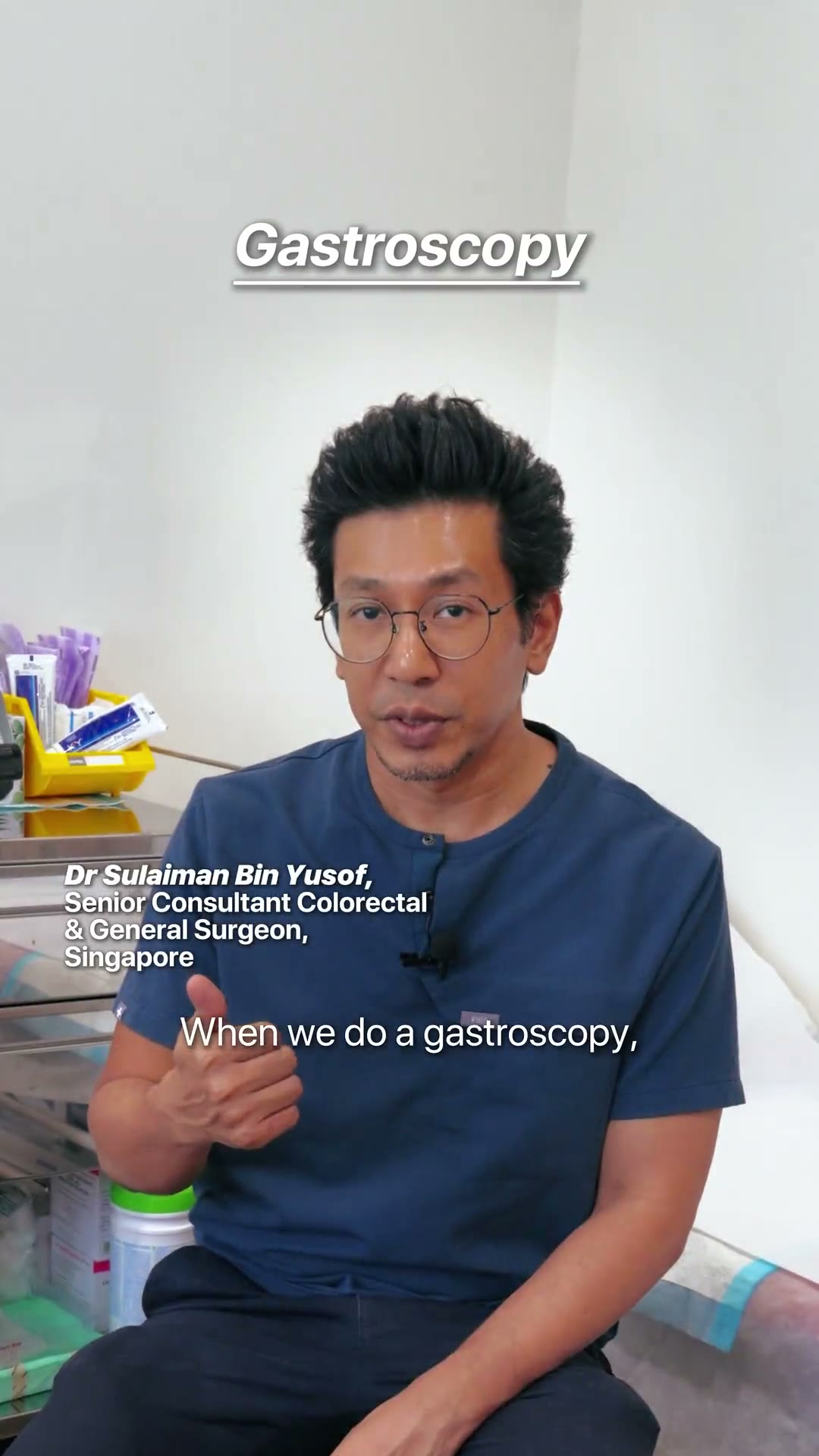
When to consider a stomach scope (gastroscopy)
Persistent reflux, swallowing difficulty, or pain that does not
settle. A gentle gastroscopy tells you why.
Most people search online when antacids stop working, when food
gets stuck on the way down, or when nausea has lasted longer than
a virus would explain. A gastroscopy clarifies it in 15 to 30
minutes. Guessing is worse than the answer.
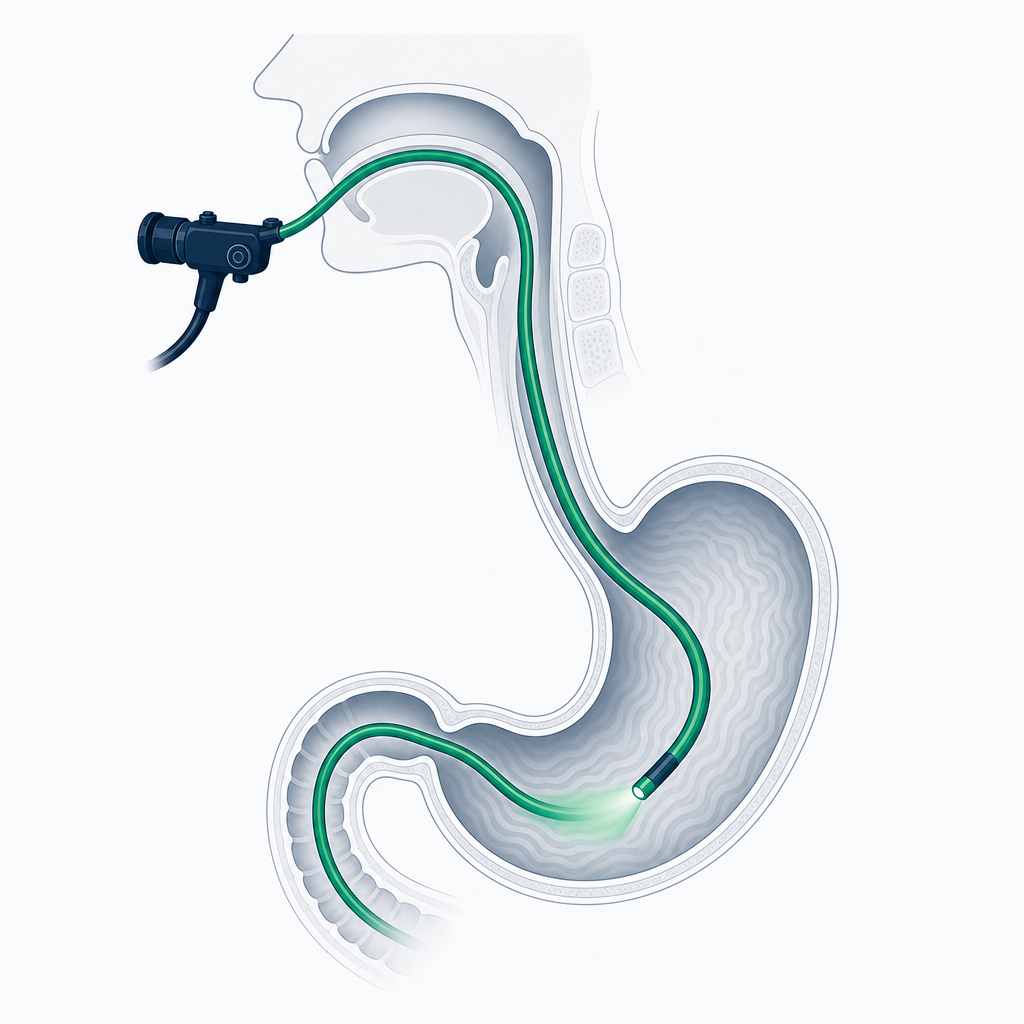
A gastroscopy, also called an OGD or an upper GI endoscopy,
examines the oesophagus, stomach, and the first part of the small
intestine. Performed under sedation with throat spray for comfort,
so you sleep through it. The procedure itself takes 15 to 30
minutes, and Dr Sulaiman shares the visual findings with you
immediately afterwards.
If reflux has lasted more than 4 weeks despite over-the-counter
medication, if swallowing has become uncomfortable, if you have
unexplained weight loss, or your GP has flagged a possible ulcer,
a stomach scope with Dr Sulaiman is the fastest route to a
definitive answer.
Why early matters
A gastroscopy can identify H. pylori, ulcers, and pre-cancerous
changes for clinical assessment.
Singapore has higher gastric cancer rates than most Western
markets, with stomach cancer among the top 10 cancers diagnosed
here. Helicobacter pylori, the bacterium most strongly linked to
peptic ulcer disease and gastric cancer, infects roughly half the
global adult population. A gastric scope with biopsy is the
gold-standard test that confirms it and lets the doctor plan
treatment.
The Health Promotion Board recommends investigation for persistent
upper GI symptoms in adults over 40, especially with risk factors.
Source: Singapore Cancer Registry (NRDO); Ministry of Health
Singapore + Health Promotion Board guidance on upper GI symptoms.